We fill the communication gap between representative/lawyer and client by working on a set-fee basis, not an hourly rate, and by giving unlimited time to research and to discuss the facts and issues. Our goal is to assure each client that he or she has someone in their corner at all times and that the arguments presented are accurate and comprehensive. We keep all parties on the same page.

That's what Due Process Advocacy is all about: preserving the right to be heard and to have relevant facts considered.
Showing posts with label UFT. Show all posts

Thursday, June 28, 2018

From Editor Betsy Combier: The JANUS Decision and Teacher Unions


The abundance of opinions on the JANUS decision just shows what a hot topic this is. The only outcome that anyone can guarantee at this point is that Unions throughout the U.S. will change in some big or small way to earn/win/argue for members.

This is a good thing.

Why do I believe this is a good decision for unions and members?

First, change happens everywhere, in all companies, groups, and organizations and in relationships, both personal and interpersonal. When change does not happen for a very long time the ties that bind go stale. I think it was time to take a look at what unions across our vast country were doing for the members, and to examine closely whether or not the actions taken by the union top dogs earned the members' allegiance and dues money. Sadly, many union Presidents have forgotten the rank and file or allowed their inner circles to abandon the rule that members needed to be represented and their rights honored above all else. Political interests were permitted to become the collective voice before the collective voice of members uttered a word, or after. Dissention was scorned. This is not good.

I remember the 2016 election for United States' President when the United Federation of Teachers in New York City came out and urged members to vote for Hillary Clinton. OK, that's fine, if the opinion gives opposing opinions equal time. However the backlash we in NYC saw against any member who did not want to vote for Hillary was not OK. It became ugly, with hate-filled rants by UFT members about anyone who spoke up about disliking Hillary for any reason.
Second, the JANUS decision does not mean the end of unions but the beginning of a more considerate union movement which honors and respects the members, their rights, and their money.

See:
How will the upcoming Janus Supreme Court case impact teachers in each state?
"At the center of the Janus case is whether public sector unions are legally allowed to collect "agency fees" from non-union members. Agency fees, also known as "fare-share" fees, are fees paid by non-union members to the union in order to cover the cost of collective bargaining on their behalf. Because union members and non-members alike stand to benefit from a contract the union negotiates, the theory goes, non-members should have to contribute something to the costs of collective bargaining. Janus challenges this logic, arguing that these fees violate non-members' First Amendment rights by requiring the monetary support (which counts as speech) of certain political stances taken by the union on teachers' behalf during collective bargaining, regardless of whether the teacher agrees with the stance."

UFT may have to dramatically slash $182M budget

NY POST Reporter Carl Campanile wrote about how a US Supreme Court decision for Mark Janus would affect the UFT:
"The belt-tightening may have already begun. The event was held at UFT headquarters at 52 Broadway instead of the Hilton Westchester in Rye, NY, where the union typically holds its retreats.....
The UFT is a massive, far-flung enterprise with a $42 million payroll that includes more than 700 members paid to perform full-time or part-time union duties.
The payroll includes borough reps, district reps and 65 staffers each making more than $150,000. Mulgrew pulls in $283,000.
The UFT empire includes offices in all five boroughs and the lease of a building in Delray Beach, Fla., to serve thousands of retirees in the Sunshine State.
The budget also includes millions of dollars in spending to law firms and media and political consultants to advance the union’s collective-bargaining strategy and broader agenda. Millions more are spent on catered events, conventions and donations to allied groups, including the NAACP, New York Communities for Change and The Black Institute."
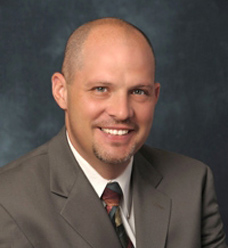
UFT President Michael Mulgrew

In New York City teachers are represented by the United Federation of Teachers or UFT, and in my opinion, change toward a more "members first" approach is both timely and needed. I used to work for the UFT, and while I loved my job as a Special Representative,  I knew that many members were not heard or helped, and this remains true today. That hurt. I left to do my own work to assist people crushed by malice, unfairness and/or discrimination.

I hope that the coming changes will lead to stronger unions who value members' rights above all else and therefore earn the loyalty, rather than take it in order to support political campaigns and expensive hotel accommodations.

Let's see what happens. I am hopeful that a new look at the rights of members to pay dues will bring union bigs to once again listen to the voices of those for whom unions were created, and not just pretend to hear what rank and file members want.

Betsy Combier
Editor, ADVOCATZ.com
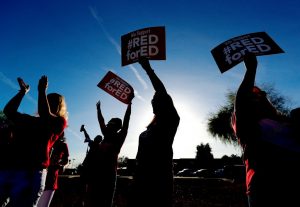

Arizona teachers protested in April in a statewide walkout, one of several this year. The walkout movement offered a glimmer of hope for teachers’ unions, which lost the right to collect agency fees.CreditMatt York/Associated Press

What the Janus Decision Means for Teacher Unions
By Dana Goldstein and Erica L. Green, New York Times, June 27, 2018

It has been months of whiplash for teachers unions. The nation’s highest court decided on Wednesday that they, and other public sector unions, can no longer collect agency fees, which are currently mandatory in 22 states.
The ruling came down after the unions racked up a series of victories early this year, taking part in teacher walkouts in six states and winning raises and new education dollars from conservative lawmakers.
Now, teachers unions could lose up to a third of their members and funding as a result of the decision, labor experts say, some of the same money that fueled the walkouts.
“Members and money are power in politics,” said Terry Moe, a Stanford political science professor who has written critically of the unions. “This will weaken the teachers unions nationwide as a political force.”
The walkout movement began in West Virginia, where agency fees are already outlawed, and was largely driven by rank-and-file teachers, not union leaders. While union members pay dues, agency fees cover the costs of representing nonmember teachers in contract negotiations and disputes with management.
The decision in the Supreme Court case, Janus v. American Federation of State, County and Municipal Employees, “will affect us, because it’s going to hurt the national” unions that provided crucial support, said Jay O’Neal, a West Virginia teacher and a leader of the protests.
States with agency fees and public sector collective bargaining, he said, tend to have higher teacher salaries and school funding than right-to-work states like West Virginia and the others where teachers went on strike.
Nonmembers can already opt out of paying for political lobbying. But because unions engage in politics even at the bargaining table, on issues such as how public dollars are spent on salaries and benefits, five of the court’s justices said such fees violate workers’ free-speech rights, by forcing them to give money to organizations whose views they may not support.
Given the court’s conservative tilt, the two national teachers unions have considered the ruling all but a foregone conclusion for several years. They plan to reduce budgets and cut back on activities like conferences.
Public sector unions have been under attack for years. Several states, including Iowa, Michigan and Wisconsin, have passed laws aimed at weakening them, and membership has declined, even in places where unions continue to represent teachers and other public sector workers in contract negotiations.
About 70 percent of the nation’s 3.8 million public school teachers belong to a union or professional association, according to a 2015-16 survey by the National Center for Education Statistics, down from 79 percent in the 1999-2000 school year.
Lily Eskelsen García, president of the National Education Association, the nation’s largest teachers union, said that the Janus decision could mean a loss of up to 200,000 members: $28 million less in the organization’s $366 million budget.
The union is preparing a campaign to mitigate the fallout, in particular reaching out to younger teachers who do not have deep loyalties to organized labor.
“We know it will have an impact, and we know we will come back,” Ms. Eskelsen García said.
The National Education Association does not plan to curb its political activities, which are largely on behalf of Democrats and liberal groups. Among the union’s priorities is mobilizing teachers to vote in this year’s midterm elections, Ms. Eskelsen García said.
Neal McCluskey, director of the Cato Institute’s Center for Educational Freedom, said the Janus decision reversed a “fundamentally unjust” requirement that forced teachers to pay for the union’s political agenda.
“This restores teachers’ ability to say, ‘I will not support speech or political activity that I don’t agree with,’” he said.
For union allies stung by the court decision, the walkout movement offered a glimmer of hope. The protests occurred in states crippled by education funding cuts since the recession, and where unions are already weak and working without agency fees. Union affiliates in several of the states, including Arizona, North Carolina, Oklahoma and West Virginia, said they had signed up hundreds or even thousands of members since the movement began.
In Arizona, where the walkout prompted Republican lawmakers to give teachers a raise, the Arizona Education Association attracted 2,000 new members this year, compared with an average of 400 to 600 in previous years, the group’s president, Joe Thomas, said.
In many of the walkout states, the teachers who led the protests first gathered supporters on Facebook, sometimes with little help from union officials. But the state and national unions stepped in with organizing and lobbying muscle — and money — that sustained the movement as it grew. That support could wane if teachers in strong-union states like California or Illinois choose not to pay dues and fees.
Despite having worked together during the protests, some walkout leaders have little loyalty to unions. In Oklahoma, Alberto Morejon, a 25-year-old middle-school history teacher, started a Facebook group that pushed for the walkout. Many in the group were frustrated, he said, by union leaders whom they believed were not responsive to their concerns, and whom they felt were too quick to call off a nine-day labor action in Oklahoma in April.
“Teachers starting off, the salary is so low,” Mr. Morejon said. Foregoing union fees means “one less thing you have to pay for. A lot of younger teachers I know, they’re not joining because they need to save every dollar they can.”
A recent survey of 1,000 traditional and charter school teachers across the country, commissioned by the advocacy group, Educators for Excellence, gave a preview of the challenges facing unions. While most of those surveyed said that working conditions would be worse without union representation, six out of 10 nonunion members currently paying agency fees said they would likely opt out after the ruling.
Anticipating the decision, some leaders have sought countermeasures. In April, Gov. Andrew M. Cuomo of New York, where public sector unions remain powerful, signed a law freeing the unions from the legal requirement to represent workers who have not paid dues in disputes with management. Labor experts say this will likely encourage teachers to maintain their union membership. Other liberal states may follow.
Randi Weingarten, president of the American Federation for Teachers, the other national teacher’s union, remained optimistic: Of 800,000 members in 18 states affected by the Janus decision, the group said it had secured more than 500,000 “recommitments” to retain membership since January. About 90 percent of the A.F.T.’s 1.8 million members are school educators.
The Trump administration and its conservative allies that funded Janus have made it easier to make the case for union membership, Ms. Weingarten said.
“These folks that have huge power over their lives have tried to cut school budgets, tried to hurt their health care, cut retirement benefits, privatize hospitals and schools, are now having the chutzpah to say, ‘Give up your union to get a quick raise,’” she said. “People are getting it big time, and are basically trying to stick with the union.”
Patrick Semmens, a spokesman for the National Right to Work Legal Defense and Education Foundation, whose lawyer argued the Janus case, said the decision would not prevent union leaders from bargaining on behalf of its members. But it would expose whether they were in tune with their members’ best interests.
“It’ll mean that teachers can now hold union officials accountable,” Mr. Semmens said. “It allows them to say, ‘If you want my money, you have to earn it now.”’

JANUS AND TEACHER SALARIES: This week, the Supreme Court’s ruling on the closely-watched Janus v. American Federation of State, County and Municipal Employees case is likely to leave public educators feeling uneasy.
The ruling, a 5-4 split in favor of the plaintiff, Mark Janus, a child support employee at the Illinois Department of Healthcare and Family Services, is expected to have a national impact on the wallets, power, and influence of unions. At a high-level, the case concerns whether public-sector employees who indirectly benefit from union representation must still pay union fees, even if they are not involved (or have no interest) in the union. (For more details, see this Vox explainer)
Today’s ruling will legally make all states “Right to Work,” meaning employees who choose to opt out of unions can no longer be forced to pay dues.
Traditionally, union leaders have justified forcing non-members to pay dues by noting how such employees indirectly benefit from union bargaining. For example, in New York City where union leader Michael Mulgrew recently negotiated the first paid parental leave agreement for teachers, all teachers — union members or not — have the right to take advantage of the new rule. In states where teachers have gone on strike over low teacher salaries, some teachers’ unions have been able to successfully negotiate higher pay.
It is unclear how the Janus ruling will make things easier or more difficult for unions in the future. But several organizations on the right and left are already weighing in, noting what this might mean for teacher unions in the future.
Read the court’s decision here.
Supreme Court’s Janus v AFSCME ruling will force unions to be more accountable: Teacher
Aaron Anthony Benner, Opinion contributor, Published 10:14 a.m. ET June 27, 2018

The decision affects 5 million workers. Time

Unions can be great for workers. But supporting workers’ rights isn’t political, and it doesn’t make you anti-union.
As a teacher in Minnesota, I didn’t have a choice about whether or not to pay the union that was supposed to represent me, and when my union ultimately failed to stand by my side during a dispute with my district, I had no choice but to continue paying it.
Fortunately for teachers and other public employees across the country, no government worker will be forced to pay a union just so they can keep their job moving forward. The Supreme Court has ruled in Janus v. AFSCME that requiring someone to pay a union violates the First Amendment’s protections of free speech and association.
It means that, if another teacher or public employee is let down by his or her union, that person doesn’t have to continue paying dues or fees if that’s not in his or her best interest. Or, if that person chooses not to belong to a union for any other reason, he or she could continue working anyway. In addition to being fair to workers who deserve the freedom to choose whether or not to pay a union, I believe this ruling will lead to unions that are more responsive and attentive to their members.
I come from a union family and was brought up, as many Americans are, believing that unions exist to protect their members. My father was a police officer; my mother was a factory worker. As a public school teacher, I belonged to a union for 15 years and always believed that the union would be there to fight for me if I ever had a problem with my employer.
When I finally needed my union — the Saint Paul Federation of Teachers — not only did it fail to defend me, it actively worked against me with my employer. And all the while, I had to keep paying.
It started in 2014, when Saint Paul Public Schools rolled out a new policy with the hope of lowering the suspensions of African American students. As an African American myself, I took issue with the idea that some behavior problems would be classified as cultural traits, and thereby excused, under this policy. The intent was good, but in practice, it was fraud, and I couldn’t sit by and watch my students be harmed.
After challenging the policy at a school board meeting, I was faced with multiple frivolous investigations, which I’m now challenging in court. My spotless teaching record was marred, and my union was nowhere to be found.
I eventually began speaking to the media about the destructive racial equity policy, bringing a spotlight to the district. Soon, I learned that my union — which I was still paying — was working with my employer to remove me. Ultimately, I chose to leave my teaching job in public schools, but I have continued educating students in the private sector as the ninth-grade dean of students and activities director at Cretin-Derham Hall High School.
In February, when the Supreme Court heard oral arguments in Janus v. AFSCME — a case from Illinois that challenged the precedent that public employees can be forced to pay a union in order to work — I joined other teachers on the courthouse steps to support plaintiff Mark Janus. I shared the story I’ve just outlined and how my experience changed my mind about unions and freedom.
I was surrounded by people rallying in favor of giving people a choice and voice when it comes to unionism, but there were also union protesters who tried to shout me down and block out the signs supporting Mark Janus. I and other speakers were dismissed as being anti-union and Republican. I’m neither. Supporting workers’ rights isn’t political, and it doesn’t make you anti-union.
I like unions and always have. I voluntarily belonged to one for many years, and my parents were both represented by unions that I believe served them well.
But I realized that not all unions work for their members like they should, and in those cases, members should have the ability to leave — and take their hard-earned money with them.
Fortunately, for public employees across the country, the Court has now ruled they have that right.

Aaron Anthony Benner has been a Minnesota educator for 21 years. He worked as a teacher in Saint Paul Public Schools and was a member of the Saint Paul Federation of Teachers for 15 years. He is now the ninth-grade dean of students and activities director at Cretin-Derham Hall High School.

Monday, April 2, 2018

Getting Tenure

ADVOCATZ believes in tenure.

For the past 15 years we have been researching case law and attending as well as assisting at teacher tenure hearings (3020-a Arbitration), and we offer below some guidelines from the UFT on how to get tenure.

We recommend that each and every observation, email, meeting, letter, or notes given to you or sent to you be rebutted/responded to. We suggest that you carefully and honestly state facts, and drop incendiary items such as large type, insults, the use of derogatory terms, etc.

Grieve any harassment (Article 23), grieve U-ratings, and Appeal any false APPR ratings. Don't be fearful of asserting your rights, these are stepping stones that must be done in order to defend your position later on.

When you get into a hearing, don't sit back and let your representative do whatever they want, partner with your representative, and make sure that they do what you want. You have the facts of the matter, you count. Don't be silent, but say what you want to say professionally.

What does that mean? Contact us.
betsy@advocatz.com
betsy.combier@gmail.com

Betsy Combier
Editor, ADVOCATZ.com
Editor, ADVOCATZ
Editor, Parentadvocates.org
Editor, New York Court Corruption
Editor, NYC Rubber Room Reporter
Editor, NYC Public Voice
Editor, National Public Voice
Editor, Inside 3020-a Teacher Trials 

All you need to know about getting tenure
Gaining tenure is an important milestone for new teachers. Having tenure means you can’t be terminated without due process and you’re entitled to a hearing if the Department of Education takes disciplinary action that could lead to termination.
Teachers hired before July 1, 2015, generally serve a three-year probationary period. Teachers hired after July 1, 2015, are generally eligible for tenure at the end of their fourth year.
There are two ways to reduce your probationary period. If you worked as a regular substitute in the same license and at the same school level, you can reduce the normal probationary period by up to two years. This is called Jarema Credit, and you should apply if you think you are eligible. The application form is online. Another way to reduce your probationary period is called “traveling tenure.” If you received tenure in one license area and elect to take an appointment in a new license area or if you were tenured in another school district in New York State, you should apply to have your probationary period reduced by one year.
If you think you are eligible for either of these options, or have any questions, contact your UFT borough office.
There are many steps you can take to prepare for your tenure decision. First and foremost, you need to know your tenure date. To find it, check with your payroll secretary. You’ll want to be proactive in meeting with your principal in advance of your tenure decision to review your work.
In New York City, tenure is granted in your license appointment area, which is why it is of utmost importance that your license code match the subject and level in which you are teaching.
Tenure isn’t automatically granted at the end of your probationary period. To be granted tenure, you must:
  • Be on track to complete all your state certification and city licensing requirements, file an application and receive professional certification;
  • have a record of acceptable service during your probationary period; and
  • be recommended for tenure by your principal.
Your tenure becomes permanent only after you complete all your certification requirements.
In preparing for tenure, you’ll want to keep records and documents that reflect on your performance, such as observation reports; notes or emails to and from your colleagues, mentor, supervisors and parents; and evidence of your professional contributions to your school. Add a brief explanation or context for each piece of evidence you include and be sure to show how you differentiate to accommodate children with diverse abilities.
If applicable, you can document the work you’ve done for your school community, such as clubs or student groups you advise or activities in which you’ve participated.
There are many ways you can organize this information. Some teachers choose to build tenure portfolios using binders organized into subsections where they store lesson plans, student work and assessments, observation reports, certificates from professional learning activities and other records.
Other teachers recommend digital record-keeping, using online resources to organize files. Dropbox, Google Drive or iCloud are all services you can use to store your work.
If you are up for tenure and your principal asks you to agree to extend your probationary period, you should contact your chapter leader or a UFT representative to help ensure that your rights are protected.
The UFT offers tenure workshops in its borough offices. Check the UFT website’s events calendar for details.

Thursday, September 14, 2017

The UFT-NYC DOE Partnership of Harm at Education Law 3020-a Arbitration

UFT General Counsel Adam Ross, UFT President Michael Mulgrew, NYC Chancellor Carmen Farina,
and former New York City Department of Education General Counsel Courtenaye Jackson-Chase


The 3020-a Arbitration Newswire: Digging Up The Garbage On the UFT/DOE Partnership of Harm For Charged DOE Employees


On February 24, 2015, the New York City Department of Education held a mandatory meeting at TWEED at 4:00pm for all NYSUT, all DOE Attorneys, and all arbitrators working on the NYC rotating permanent panel for 3020-a hearings (both misconduct cases under ATU and incompetency cases under TPU).

I was told about this meeting by an Arbitrator several days before the February 24 date, and at my suggestion a private lawyer with whom I work on 3020-a hearings sent an email to the creator of this meeting, former General Counsel Courtenaye Jackson-Chase, asking for an invitation. Courtenaye answered with "sorry, you are not invited to this meeting, but we will be scheduling a future meeting for all private lawyers."
Courtenaye Jackson-Chase
She never did have this meeting for non-union teacher defenders, so I filed a FOIL request for the information, and was shocked to get a reply that I would have to pay someone $29.95/hour to download emails. I posted all this on my blog, and then the NYC Records Access office relented, and sent me the video, the transcript from the video, and the emails on who was present/invited, all posted below.


In this material there are statements which many readers may find surprising, if not very distressing.
Why I write "distressing" is : the emphasis on speed and efficiency trample important procedural and substantive due process rights, such as:

1. ignoring Education Law 3020-a(2)(a) with the requirement of the determination of probable cause by a vote in an Executive Session of the school board take place before the charges are served on the charged party. In NYC this never occurs, in fact these steps are simply overlooked. The Office of Legal Services creates the charges, serves them, assigns an Arbitrator after the charged party asks for a hearing, and goes immediately into a pre-hearing. The principal signs off on the probable cause, and then the Respondent cannot argue that this is improper. The tell-tale sign of this "speed and efficiency" garbage is the empty box on the right, above the "Please be advised that at a meeting in executive session on the above date..."

This box, the date of Executive Session, is never filled in. NYSUT, the UFT, and the DOE don't want to take the time. Respondents should object, then use this in any Appeal. The rest of what Adam, Mike, Carmen and Courtney are saying in the video and the transcript is also meaningless garbage. They do not mean that they want fairness, just speed. This same argument was used by UFT Attorney Carol Gerstl in or about 2008 when she stopped anyone in NYC from having a three-member arbitration panel. This took too much time.

2. The arbitrators and DOE/NYSUT Attorneys are together for hearings through the school year, and make deals behind the charged party's back, as well as cut out any private attorney hired to replace the NYSUT attorney. This creates a closed club, and when a private attorney may have to adjourn dates due to other commitments, the arbitrators wont let this happen.

3. In NYC the arbitrator is assigned by the Director/Deputy Director of the Unit whose case it appears under (ATU or TPU). Outside of New York City the charged party may participate in choosing the arbitrator. Not in NYC. Speed counts.

4. Witnesses brought in by the NYC DOE are scheduled without problem, but when the charged party starts his/her case, there is a rush to finish, and all witnesses must be given "offers of proof" - i.e. the DOE and the Arbitrator don't want to "slow things down" by having witnesses for the charged party.

5. Closing arguments are done when testimony is finished, preferably the same day. The charged party does not have the transcripts because the Respondent's case always goes second. The charged party feels rushed, unable to bring in all the documents and evidence he/she believes prove the case against the DOE.

At all times, the Arbitrator,  DOE and NYSUT (if NYSUT is not replaced by a private law team, as happens frequently) work together to make sure that nothing "irrelevant" is brought in to be discussed or examined. What is "irrelevant"? Yep, that's right, whatever the DOE wants it to be.

Here are the emails and documents sent to all Attendees (Arbitrators) on the Joint Education Law 3020-a Panel.

In the video above you can see that UFT General Counsel Adam Ross(UFT Lawyer -far left), UFT President Mike Mulgrew (second from left), NYC Department of Education Chancellor Carmen Farina (second from right) and former NYC DOE General Counsel Courtenaye Jackson-Chase, all believe that speed is the most important mandate for all participants in the 3020-a process (except of course the charged employee/Respondent). I am not the only one who has seen the UFT-NYSUT-DOE chumminess.

I have written quite often about my dislike about how NYSUT Attorneys do 3020-a hearings (and, by
Stuart Lichten, Daniel Bright, of Lighten & Bright

 the way, I do not like the hypocrisy of Maria Elena's husband, Stuart Lichtendefending Claude Hersh Assoc. General Counsel, NYSUT, and Steve Freidman, NYSUT Attorney, in the case of Lisa Guttilla, Federal Court. 1:14-cv-00156-JPO
Mr. Lichten was hired to do the 3020-a of one of my favorite teachers, ever, from my daughter's school, NEST+M.I suggested that I testify for him as a parent, but Stuart told the teacher "No, never". My friend was fired by the Arbitrator.

Listen to David Brodsky, Director of Labor Relations, Theresa Europe, Director of the Administrative Trials Unit, and Florrie Chapin, the Director of the Teacher Performance Unit, explain the "Tenured Teacher Removal with Charges" Process .


I LIKE most of the NYSUT attorneys as people, I dont really know any of them "well". David Pakter took a picture with me and his NYSUT Attorney Chris Callagy in 2009:
Betsy and Chris Callagy, about 2009
I still see Chris at 100 Gold, minus the beard. He is funny, does a good job....but is still under the guidelines of NYSUT and the DOE, whereas private lawyers and non-lawyer advocates are not. He is, nonetheless, a favorite of many members who have had him assigned to their cases

In my opinion, an informed, well-experienced advisor/Representative who has won many 3020-a is the best bet for a strong defense in 3020-a, but that is my biased opinion, being in that group (We have many non-termination awards, and 6 full exonerations - no penalty).

I have seen and heard NYSUT attorneys in a shouting match with the charged person to get him/her to resign, settle, go away. This ain't right. The only chance that a Respondent has to say what happened and tell his/her side is if he/she goes through the 3020-a and testifies. Sometimes the NYSUT Attorney convinces the Respondent not to testify. This is automatic termination. Arbitrators must terminate, as there is nothing heard as far as evidence from the charged party, therefore everything that the Principal/AP/DOE witness testified to must be held as fact.

Remember I'm not an attorney. But to not testify on your own behalf is absurd. I was invited into the chambers of a NY State Supreme Court Judge on this issue, with a Respondent (and the DOE Attorney, NYC Law Department) who appealed his termination after he was fired by the Arbitrator at his 3020-a. The Judge said that this was a real problem, and that HE SHOULD HAVE TESTIFIED.

We do win cases - my point is, put everything on the table and in the record!

See the case of David Suker, I helped him with his appeal of his termination:
The New York City Rubber Room Anti-Teacher Charging Process Shows How Corrupt the Carmen Farina-Bill De Blasio Department of Education Really Is. by Betsy Combier

My point is that there are many twists and turns in the proceedings known as 3020-a, especially in New York City with the permanent panel of arbitrators, a very bad idea. More about that in another post.

Here is the full transcript of the video above, sent to me as part of the FOIL request:

Welcome.[CARMEN FARINA]

>> You're like a cast of thousands. I didn't even know I had this Army. So this is really good.
I would say thank you for coming.
I know many of you who have traveled distances to be here today, and I appreciate your coming.
I think you're, first of all, seeing something very unique. You're seeing two of us sitting next to each  other.
We're actually smiling at each other.
All because we really have one mission, and one mission is to make  sure that there is the best teacher in every single classroom in every school in our city.
Many of you are parents and  grandparents.
What I want to tell you is that I take very seriously about any classroom that I would not put my grandchild in, I would not put anybody else's children in.
By the same token, there are many teachers who can have an angry  parent or an angry this or an angry that bring up charges that may not be correct, but we cannot have people in  limbo.
We cannot have people who should be working, not working, and people who shouldn't be working, working.
And I am asking you to really rethink the whole process of the work that you do.
First of all, we want to make sure you're looking at evidence that matters.
Having been a principal who would spend 40 percent of a given year writing people up.
I understand how much time it took me.
If I forgot to cross a T, I literally hired a retired principal to  just read my paperwork because it was so cumbersome, and as onerous as some of the charges were, if my T wasn't crossed and my dot, we should not be looking at our work in that kind of  detail.
We should be looking at what is the problem and how serious is it and what do we do as the next steps?
Do I want to make sure that you're looking at evidence that's relevant to the case.
, that that's your focus, your lens.
When I visit a school, I know there are at least three things I want to look for in every single school, and I am focused on  that.
Principals try to divert me and say look at this, look at that, I want to go back to the three things that I want to look  at.
So what are the things you need to do to decide your case and focus on those.
Also, I don't know why we need five witnesses when three will  do.
The reality is, if something is substantiated and one person says it, another person says it, and then a third person says it, I don't understand why we need to have a cast of  thousands.
And I'm really asking you -- and I don't think it's due  process.

It's just a matter of how much longer can this drag out. I'm looking at how much sooner can we get this  done?
Is there's a 30-day rule for most things, and I think to the degree that we can do it, I suggest we do it.
The other thing is that I think it's really important also to ensure that, if there's anything that's standing in the way, at least from my perspective as a chancellor, and you need me to fix it, I'm more than happy to fix it.
So for example, you need a witness, you need them to be there at 4:00, you need someone to come from the school, to a degree that I can say  to a principal make sure this person is released when this person has  to be there, I'll do that because my thing is to get this thing done  as quickly as possible so that everyone's rights are protected, and  most importantly, the child who sits in a  classroom.
And if it means I have to send someone to convince the parent for a child to be a witness in the case, I'm happy to do that as well, but I also feel that sometimes we wait so long to hear a case, that my  memory certainly isn't what it used to be, we can't expect a kid to be able to do that.
So the quicker we do things, the more concentrated we are on getting the case settled, the better we'll have a public school system.
And both Michael and I are convinced the only way to have a public school system is we hold everyone to the highest level.
I do not want to see some teachers who are getting by on slightly ineffective.
I only want highly effective teachers in every one of our schools.  To that, I am committed, and I am committed, along with Michael, to make sure the 30-20 process is fair, equitable, and reasonable.
I do not understand why some cases are dragging along as far as they are.
Again, I'll be very personal.
I remember having a teacher for six months on suspension, going back to the hearing, having the teacher allowed to pick, in those days,  what kind of hearing she wanted, and then coming back to the classroom and actually doing very serious to a child because of the process.
We cannot have that. You're on, Michael.

[MICHAEL MULGREW] 
>> Thank you very much, Carmen, and thank you all for coming. It's lovely weather that we're having here.
I just found out that we now have the coldest February in the history of New York City.
So thank you all for coming out.
I met with some of you years ago, and I want to first thank you for the amazing service that you supply us.
These are not easy issues, and we have taken a system that used to  be
-- take a lot longer, and we have really shortened it.
And what you're hearing from myself and the Chancellor today is we're looking to even try to make it faster.
Fairness is the key to all of this.

The legal processes, I understand at times, can become somewhat of an impediment in terms of efficiency and speed, but what you're hearing us say here today is this is what we would like.
And if there is something going on that we should know about, if there is someone on either side, an attorney from either staff doing something that drags out a case, not doing things properly, not using the full hearing day, we need to know about that because we will be looking, because we do believe it is important that, if there is any sort of allegation, we want it to take as little time as possible because I do know from being a teacher, from a chapter leader, people that would be completely exonerated but were never correct because they were out of the classroom for so long and the astigmatism that  was tied to that.
So we know it's in everyone's interest to have the most efficient, effective, speediest process as long as we can also ensure fairness, which is a difficult job that we're asking to you do.
But I know that we have shortened the timelines greatly from where we were at five and six years ago, and I can't thank you enough for that, but we're looking now to say, as Carmen said, if there's two witnesses saying the same thing, we don't want ten.
And the things that you know better than I do about what else in the process, but more importantly, if you feel there's something not going right, please let us know because we want to know if people aren't  doing what we have directed them to do, which is to make it efficient, effective, fair, and speedy.
Because that is the way that we feel will better serve the students of this city.
So I can't thank you all enough for what you already have done.
I speak very proudly around this state about what we have done here in New York City, and you all know the scrutiny that it is under, and I love that I can produce actual facts to refute a lot of the rhetoric that's out there, and that has a lot to do with your  work.
So I can't thank you enough for that, but at the same time, we believe that we can do it even better.
So at this point, questions?

[COURTENAYE JACKSON-CHASE, ADAM ROSS, AUDIENCE]
>> Sure.

>> I get a lot of questions when I speak to principals and teachers and whatever.
Not one question? Okay.
Yes?

>> Remember the last time we were here?

>> Why are we here?

>> Because we want to make sure that everybody understands that we want this process to be done quickly.

You are in charge of the process when it gets to your level.
And if there are people -- if there is something that could be done to make it faster, we'd like to hear it, and if there is a party on either side that you believe is wasting time, we need to know about it.

>> And I would say also very clearly that for too long, that the head of the education department and the unions were almost expected to be fighting each other and that this group would say, well, we can't do this because, and we can't do this because.
We wanted to be clear here today that we're giving the same message to everyone from both of us, and I think that's really important, and  it's certainly something that people outside the organization say,  well, you can't do it because of the union, or you can't do it because of the chancellor.
We're united on this one.
There is absolutely no disagreement between the two of us on only the best people need to be in these  positions.
So we wanted to say it, and we wanted to say it out loud, and we'll probably be repeating it a lot.

>> And an agreement that was signed --
>> 2010.

>> That would be five, 2010.
It said that the chancellor and the union president can bring the panels in to discuss this with them, and we just wanted to make it clear exactly what our expectations are at this  point.

>> How do the pro se Respondents get the transcripts

>> We have an agreement, as part of the 2010 agreement, that the transcripts are not necessary before you issue a decision or before you do a closing.
So the pro ses should be getting the transcripts, but it should not be impeding the speed of the process.

>> That's not my question. How do we get them?
It's on teach.
Do the pro ses have access to Teach?

>> The pro se, I don't know the answer to that.  I can find out the answer to that.

>> Come on up if you have the answer. [ No microphone ].

>> I would say for the more technical questions for the lawyers that do the work, you can feel free to stand up like Laura just  did.

>> She spoke.
They have access to the Teach.

>> Well, I would assume, since there are no questions, that everyone gets the message.
Again, I just want to be clear that, if there's anything that is actually keeping you from doing the job, all you need to do is let us know because I am determined on this issue -- many others, but this  one in particular -- that we will get to June with as many cases  closed as possible so principals can be assured that teachers they do not want back in the building, or teachers that can be cleared so they can be back in the building, we can be on their rosters at the end of June.

>> So there's no need to have transcripts before a closing argument, is that correct?
That the arbitrators should all know  that.

>> Yes, that's correct.

>> Okay.
Well, thank you.

>> Thank you for coming.

>> We can go through a couple of more technical  things.
So what I was going to just say is that to Michael and Carmen's point about making the process be as efficient as possible and still fair, there are a group of things that the DOE and NYSUT and Courtney and I have agreed to over the years to help make the process run as efficiently as possible without compromising the  hearing.
One of them relates to the holding of pre-hearing conferences, which should not be done on hearing days.
We should be using hearing days for  hearings.
We shouldn't be using them for settlement discussions either. Parties are free to discuss settlement whenever they  want.
Courtney and I actively encourage people to settle, but hearing days should be used for hearings.
The pre-hearing conferences should be used to the maximum extent possible to premark exhibits, stipulate the facts, stipulate to admissibility of documents, where those things are not in dispute.  And discovery should be provided prior to the pre-hearing conference to the extent that that's required by our  agreements.
We have agreements about what things are supposed to be provided on what timeline, and we have asked that the -- all of the attorneys abide by those provisions.

>> I think the other thing that we want to talk about, I know that there are more cases that are handled by private counsel, and  we're going to be doing another orientation.
But I know that it's hard when you have lawyers who may not be used to kind of the groove of things, and they're balancing cases in  courtrooms and also trying to manage within this  system.
Please let us know how we can be helpful to help better integrate them into the system so they get caught up to speed because I know at times it can be a nightmare for everyone to juggle the scheduling that has  to happen, and we want to help get you to the place where the rules  for timelines can apply to everybody.
So we do know.
We are aware that that's been a problem.
We're working on it on our end, but I welcome -- even though that can be seen as a more technical issue, you obviously talked to the  managers that you usually interface with and the lawyers, but you can also reach out to us so that we can help manage them a  lot.

>> Absolutely.
But what I would say is, regardless of who the attorney is, whether  it's pro se, whether it's an NYCIT attorney representing the respondent, another attorney representing the respondent -- all of the cases should be held to the same timelines, the same 60 days for doing the hearing, the same efficiency requirements, the same everything  else.
To that end, one of the other things we have agreed is to the use of full hearing days to the maximum extent  possible.
That may require either or both parties to have multiple witnesses ready to go in the day, and that is something that we expect both sides of the case to be ready to do.
That's something that's written in our agreement and that we believe  is an important part of making sure that the full hearing day is  used.

>> I will add, particularly for the DOE, since we have the burden and  we also have the school-based witnesses, as Carmen said, we are committed to making sure that we can work to make things easier to get the witnesses here.
Again, everyone here knows that it's a hard juggle to manage what we  do down here and what goes on in schools, but I welcome your feedback  on that point, and we're committed to making that even more seamless.  I know we've made some improvements over the last few years, but we're going to keep working on it.

>> One of the things that we hear a lot about, Courtney and I do, is about the length of particular testimony and who is allowed to testify to what.
My way of summing this up has been that grandma is not a relevant witness.
We are asking the hearing officers to actively control the hearings, to make firm -- rather than -- we know there's a tradition in labor arbitration to sort of take everything for whatever it's worth and sort it out later.
That is not what I think is the best way to be doing  business.
We think the hearing officer should be ruling on relevancy, ruling on redundancy, ruling on cumulative, ruling on whatever it is, hearsay, whatever it is, to make sure that we're not spending an inordinate amount of time on the testimony of witnesses who don't have anything relevant to testify to or anything additionally relevant to testify  to.
One of the other things we've looked at in terms of the process is the use of rebuttal witnesses.
We have pretty clearly written out that rebuttal is supposed to be  used only for purposes of refuting a fact that an opposing party attempted to establish on its case and not just for further bolstering the case that one side or the other put on on its direct case, and we would ask all of you to please think about whether or not, in the  cases that come up for you, whether or not rebuttal is being used for what is truly a rebuttal purpose and not simply to bolster the direct case.
We talked about the private counsel  cases.
The only other thing I would add about that is that even when  attorneys change in the middle of a hearing, we totally understand  that hearing officers, and obviously the UFT and the DOE, all want to make sure that everyone has their constitutional due process and right to counsel and all of the other stuff.
But it also is not true that those changes in counsel should do anything more than the most minimal derailing of the speed of the case.
The only other thing that I have on my list of things that I wanted to highlight for everyone was decisions and that we've asked the hearing officers to -- not only have we asked, but it's in the law that the decisions be issued within 30 days.
That means, look, I have read a lot of 3020 decisions, and many of  them are comprehensive, and I know how much hard work and deliberation goes into all of those decisions, and certainly we want decision  that's are thoughtful and review all of the evidence and stand up to review on appeal.
But we also need that to be balanced with the notion that we need the decisions to be issued as timely as possible because we want the  people who should be back at work to be back at work, and we want the people who should be disciplined or terminated to be disciplined or terminated.
And it's to no one's benefit for someone to be waiting, reassigned, doing administrative work for a period of time while we wait for a decision.
Some of that is necessary. I totally understand that.
But we'd like to minimize that as much as possible. Anything I left out on our list?

>> No.

Yes, sir?

>> If you don't want us to have a pre-hearing conference on a hearing day, what do you suggest we do with the rest of the  day?

>> I think the pre-hearing conferences should not be held on hearing days.
They could be held either on other days of the month. They could be held before a regular hearing  starts.
They could be held after a regular hearing starts. After it concludes.
They can be held on a lunch break.
They can be held on another day, like I  said.
But they shouldn't be held in lieu of using a hearing day for a hearing.

>> In lieu of is your problem?

>> Yes. Okay.

>> There a hand in the back?

>> Yes.
I heard earlier about the position before they  close.
What is your position about a pro se or a private counsel insisting I need to look at the transcript before I close or I need to look at the transcript before seeing a referee.
I guess the question is twofold.
Do I need the transcript before closing?
And what is your position on reading  briefs?

>> We trust you to use your discretion. I'm sorry, I can't see younow.
We trust you to use your discretion to manage the process.  I was a prosecutor for many years.
We would have trials where someone's liberty was actually at risk. We were never permitted to actually get  transcripts.
For those of you who are trial lawyers on the criminal side, you know what I'm talking about.
The judge would just say, you were just here. You heard all theevidence.
Let's go.
I understand that these hearings don't happen on consecutive dates, but they do happen closely enough in time where we're saying if you really -- some cases might be complex.
We understand that.
But for ones that are not, you can hold  firm.
You'll have us to support you to say, I don't believe that that's necessary or warranted here in this case and your request is  denied.

>> Right, exactly.
In a lot of these cases, you'll have -- I forgot what -- I'm blanking on the word.
You won't have final transcripts, but you'll have the -- what's the word I'm looking for?
Is the tentative transcripts.

>> What's a tentative transcript?

>> There are -- well, I will talk to -- Courtney and I can talk to the transcription services about whether or not there's a way to get the transcripts to you even if they're not certified and final, as fast as possible.
Let's put it that way.

>> What about briefs?
Do you have a position on reading briefs? Do you allow it?
Do you not?

>> Again, I would never think -- I would never want to manage the process.
That's why we have you.
I respect your discretion on what you think is necessary in order to have a full and fair hearing on a case.

>> Absolutely.
I think, if you were to say, given the case, no, I as a hearing  officer don't need a brief, that that is not something that inherently either one of us think there's a problem  with.
There may be occasions where you think it's appropriate to have a brief, but if you don't think it's appropriate to have written briefing, there's nothing that we would say says to you you have  to.

>> We'll support you on that. [ No microphone ].

>> But the point is you want these cases to hold up in court, and you have lawyers insisting, again, a pro se, saying I want to file a  brief.

>> Then you can say no.

>> You're telling me to just say no.

>> I understand, but you know on appeal, as long as the facts are there, it's clear that a person acting pro se really did follow and really did understand.
I'm not saying, if I were in your shoes, I wouldn't have  some trepidation too.
The first few cases where you say no, yeah, you're going to wait and see if they take an appeal and what  happens.
But we're saying do what's right and what's best and what's prudent for each case.
If you do not need all the extra, do not do it. If it's not appropriate, don't do it.
Again, you'll have our support.

>> Nina, did you have a question?

>> No.
Just with the transcript, I just wanted to clear that  up.
As far as the practice, it's determined case by case if it's relevant. If you have a minor witness or a minor witness who doesn't have important testimony, the parties could agree that the transcript is  not necessary, it's limited testimony.
However, if there are some days of hearing where you'll have a transcript, I think certainly the need for a transcript, they should have that and should not waste time to wait for the hearings to move forward by not having a transcript for all of our  cases.
I think it works out just that way.

>> Yes, sir?
[ No microphone ].

>> It is essentially unfair that the transcripts from the DOE are open, but the testimony of our witnesses aren't available by transcript.
Is there a way to make sure that maybe that's a fair  process?

>> What you're saying is they're being prepared chronologically. So because the DOE goes first, that comes  first.
Sure, we'll certainly look into that.

>> Yeah, I think that's right, Chris.
I mean, I'm just -- I just think what Lena said is a fairly good point.
No one size fits all solution in any of these  cases.
But the hearing officers and the attorneys together should be making good faith judgments about what is necessary to do to get the case  done efficiently and fairly and what is not necessary to get the cases done efficiently and fairly and what is just extra, I guess, is the  best way of putting it.
The fact that it's a pro se counselor, pro se respondent or a nonNYCIT council, doesn't necessarily in my mind alter the analysis so much as what is the nature of the case and what is the nature of the arguments that are being made?

>> There's a question that came in via -- over  here.

>> We won't forget you.

>> There's a question that came in from someone who's doing the live streaming, an arbitrator asked the question, when private counsel's involvement in a case leads to scheduling difficulties, it would sometimes be helpful to be able to take the next case out of order.  We have been told that that is not  permitted.
Can there be some flexibility here?

>> We'll look into that.

>> Yeah, but I would also say that, in general, our agreements are pretty specific that the scheduling of the attorneys is not ordinarily  a reason, whether it be a private counsel case or otherwise, for a  case not to proceed on the scheduled  day.
[ No microphone ].

>> I'm looking for the language of the agreement on what we  have.
The actual language of the agreement on transcripts from 2010 is "a party to the hearing or a hearing officer may request an unedited copy of the relevant transcript.
If a certified transcript is not available when  needed.
The unavailability of a certified transcript shall not excuse  adherence to the timelines for completion of a hearing and issuance of  a decision.
That's the language of what we've agreed  to.

>> If I ask for it, do I pay for it?

>> I don't know the answer to that.

>> Do you guys know?

>> What's the new agreement that you just signed? Is there anychange?

>> I don't think we have signed a new  agreement.

>> Does anybody know? Hold your point.
Does anybody know if there's a cost associated with what we're calling  a tentative transcripts?

>> There's a cost for it.

>> Yes, that's okay.

>> Unedited was the word I was looking  for.

>> There's a cost for expedited  transcripts.
I'm not really clear if what Adam just referred to would qualify as an expedited.
And there is a new agreement that's in the process of being signed  with the new transcription service, but we'll get some clarity on that and let all the arbitrators know if there will be a cost involved with getting the tentative, unedited  transcript.

>> Thank you.

>> My understanding is we do not, under the new agreement, get copies of transcripts.
Okay rat?

>> I don't know, but lots of people who I trust are nodding their heads in the audience.
So I'll say yes.

>> I believe that the transcripts are going to be uploaded to  Teach.

>> Yes, that's what I said.

>> Yes, where you can get them.

>> Yeah, I know. Thank you.

>> Anybody else?
Well, now I guess you get to eat.

>> Now you can really eat.

>> And I think we lose the room at 5:00.
So you have about 15 minutes to mingle and take your  time.

>> Can I just say one other thing,  Courtney?
On behalf of the UFT, NYSUT, the DOE, we're all very appreciative of attorneys on both sides and hearing  officers.
As practitioners, we want to say it too.  We know that you all have not an easy  job.
The attorneys have the job of being zealous advocates, the hearing officers have the job of being neutral  referees.
It is not easy, but you can all -- you all do on a daily basis a vital service and can really deserve a lot of appreciation for the work you do.

>> Thank you very much."

Here are the attendees:


Betsy Combier
betsy.combier@gmail.com
Editor, ADVOCATZ